What changed?
Tools shift from helping with tasks to achieving outcomes
Every tool in that picture, from the stone hammer to the desktop computer, helped a person do a task. With an agent, you define the desired outcome and it works out the steps. It is still a tool, though. Like a hammer, it is good for some jobs and wrong for others, which is easy to forget when a tool does this much and talks back to you.
This chart from the Stanford AI Index 2026 zooms in on the last step of that picture. The early lines are tasks, like labeling an image or understanding a sentence, and AI matched people on those years ago. The steep lines on the right are goals: fix this software, or take control of a computer and get something done. That is the shift from tasks to goals, and most of it happened in the last two years.
Example: onboarding staff
Take onboarding a new staff member. With a chatbot, you ask for one piece at a time, like a welcome email and then a first-week checklist. With an agent, you set the goal, such as getting the new hire ready for Monday, and it works out the steps inside limits you set. Then you check the result.

Helps with specific tasks.
You set the goal. It figures out how to achieve it. You check the result.
Software is solved, but intelligence isn’t.
“Software is solved” is the vibe in Silicon Valley right now. But even the best models are inconsistent. They answer PhD-level science questions, yet they read an analog clock correctly only about half the time (Stanford AI Index 2026). Ethan Mollick calls this unevenness the jagged frontier, and it remains hard for people to spot.
And they still make mistakes (hallucinate). Less often than a few years ago, but as our reliance grows, it’s critical to remember that they respond and act confidently even when they’re unsure and wrong. The underlying structure (probabilistic prediction) is the same. Still flawed.
Impact on cognition
You can’t verify what you don’t understand.
AI can wear down what you already know, or keep you from building it in the first place. The second image shows a child, but the same risk applies to adults returning to college or learning new skills.
Flip for the strategy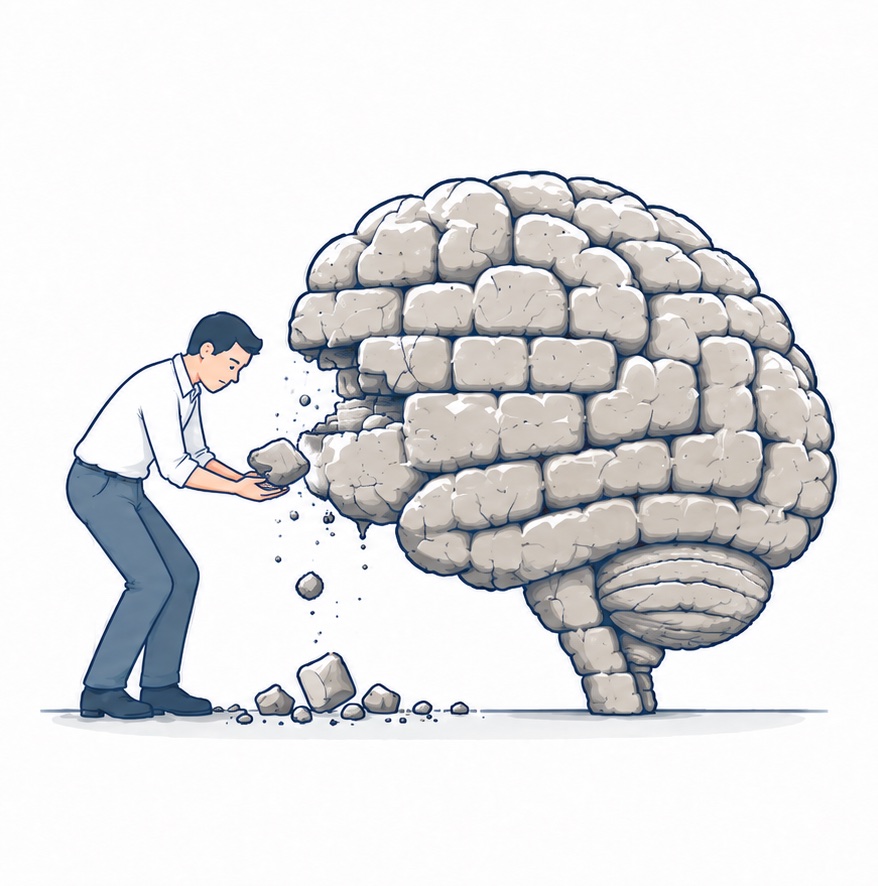
1. Losing What You Know
Delegate too much, and you may lose the very knowledge and skills needed to verify AI’s output.
Strategy: Keep “Friction”
Example: draft a training yourself, then ask AI to critique it.
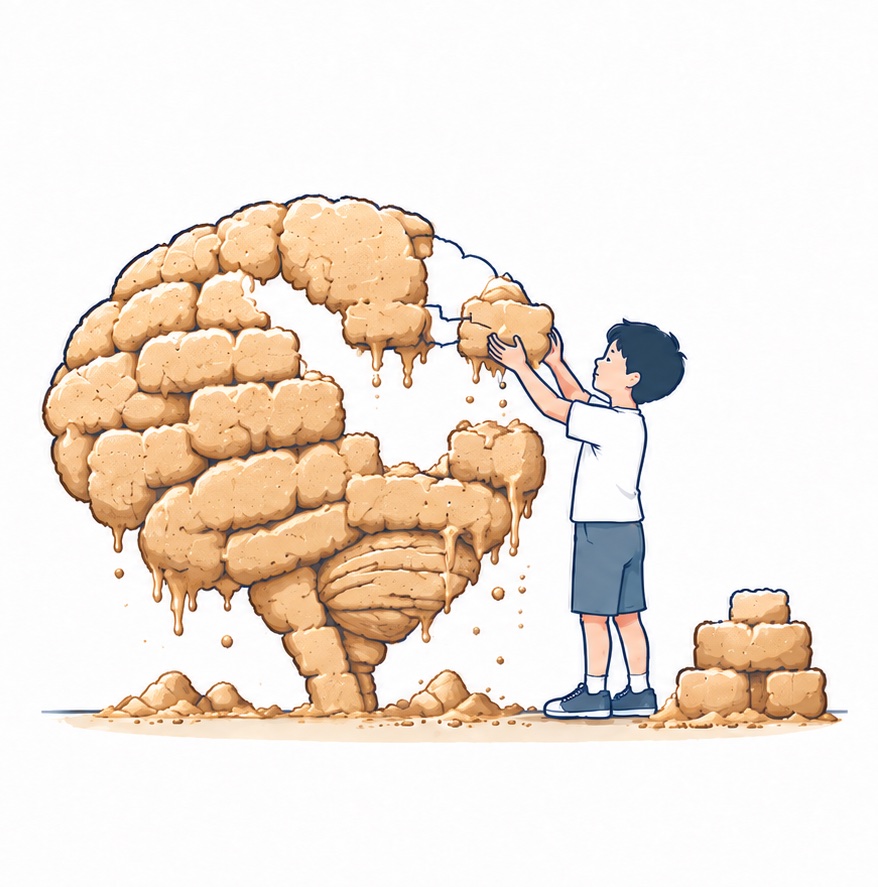
2. Never Building It
We’ve gone from search engine to answer engine. Quick, easy answer. Little struggle, little encoded.
Strategy: “Desirable Difficulties” (Bjork)
Incorporate spacing, interleaving, and recall quizzes to build long-term retention.
Writing the first draft yourself keeps the skill in use and gives you something to judge the AI’s critique against. For building knowledge in the first place, the psychologist Robert Bjork’s research shows that some struggle is what makes learning stick. Spacing means coming back to material over days instead of cramming. Interleaving means mixing topics instead of doing one at a time. More on this: Effort and Atrophy.
Impact on work
A third risk is about accountability. If your only job is to approve what the system produced, you have little say in how it was made, but you still answer for the result.
Risk:
In the loop, just enough to get blamed when something goes wrong.
Spot the differences.
Take a few minutes to spot the differences between Before AI and After AI in the image below, and think about the implications. Hint: there are at least seven.
Ready? Tap to see the differences.
- The work moved. Backlog went from 12 to 0, In Progress from 3 to 6, In Review from 2 to 13, and Done from 5 to 3.
- A robot joined her desk.
- There are more stress lines around her.
- Her expression changed.
- She has three hands.
- A stack of papers took the place of the plants.
- The words “No backlog” appear.
Automation moves the work, and the cognitive load, out of the backlog and into In Progress and In Review.
Picture one person’s work before and after automation with AI-powered tools. The backlog is gone, but Done fell from 5 to 3, and the pile now sits in review, waiting on the same person. Juggling six things in progress and thirteen in review also means constant task switching, and every switch adds to the cognitive load.
Automation doesn’t clear the backlog. It activates it.
People shouldn’t be thought of as “bottlenecks.”
When work piles up in review, the person doing the reviewing gets called the bottleneck. Eliyahu Goldratt’s Theory of Constraints, from his 1984 book The Goal, holds that a whole system moves at the speed of its slowest step. Once an automation activates the backlog, the slowest step is often review, and that is a limit of the system, not a failing of the person doing it. Two checks work better than pushing that person harder.
First, ask yourself whether it’s worth making. That gate prioritizes work before it starts, so less lands in review in the first place. Then set a limit and move at the pace of people. Work-in-progress limits, which came from Toyota’s production system and later the Kanban method, cap how much is in motion at once. That keeps the system at a sustainable pace, the speed people can review and absorb.
Human in the lead
The human defines the work, AI executes it, and the human verifies the result. A person who only signs off at the end is in the loop. A person who sets the goal and checks the work is in the lead.
Your turn
Microsoft recently announced an “Autopilot” feature described as a digital teammate that goes to work without waiting for a prompt. Four days later, OpenAI announced “dots,” its own always-on agents in ChatGPT. Meta says its personal agent, Muse, “doesn’t just answer questions, it actually does the work.”
How would you advise a colleague who wants to use Autopilot?
Key takeaways
Keep Useful Friction. Even if it appears to slow you down. Encodes information & protects your judgment. (Effort and Atrophy)
Create Automation Best Practices. Update AI policy, short trials, human in the lead. Before a team turns on a tool like Autopilot, decide in your AI policy what it may do on its own, try it first on a small, low-stakes piece of work, and keep a person setting the goal and checking the result.
Develop Durable Skills. Integrate critical thinking, troubleshooting, and information literacy into your curriculum. (Durable Skills)
The mission didn’t change. It got more urgent.
Human in the lead, not just in the loop.
References
- Ironies of Automation, Lisanne Bainbridge (1983)
- Desirable difficulties, Robert Bjork (1994) (linked paper: Bjork and Linn, 2006)
- Jevons Paradox, William Stanley Jevons (1865)
- Theory of Constraints, Eliyahu Goldratt, The Goal (1984)
- Work-in-progress limits, Toyota Production System (1950s), Kanban (2010)
- Sustainable pace, Agile Manifesto (2001)
- AI Index 2026, Stanford Institute for Human-Centered AI (HAI)
- Centaurs and Cyborgs on the Jagged Frontier, Ethan Mollick, One Useful Thing (2023)
- Introducing the new Copilot with Home, Code and Autopilot, Microsoft, September 25, 2026
- Introducing dots, OpenAI, September 29, 2026
- Muse announcement, Meta Newsroom, September 8, 2026
Keep reading
July 2026 Effort and Atrophy The cost of moving from a search engine to an answer bot, and what it does to the part of you that used to check. February 2026 Durable Skills Nine skills I would still teach a kid or train an adult on for the foreseeable future, each with a short example. February 2026 Thinking With Machines A snapshot of research on how humans and machines think together, starting from the claim that we have already achieved superintelligence and it just requires a human.Feed
 The knowledge canyon
Too much sci-fi has us stuck speaking in the wrong verb tense. The old digital divide was about access. This one is harder to see.
→
The knowledge canyon
Too much sci-fi has us stuck speaking in the wrong verb tense. The old digital divide was about access. This one is harder to see.
→
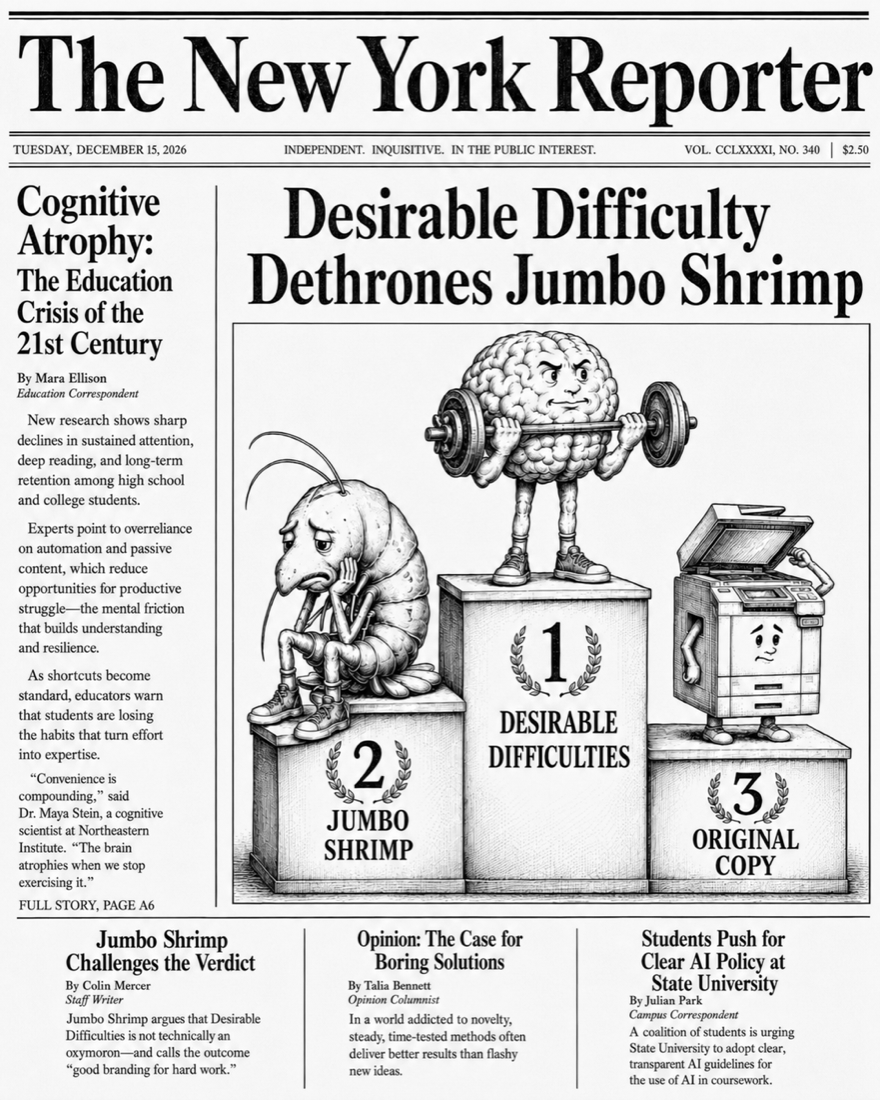 No pain no brain
The risk of AI eroding our knowledge and skills is getting more attention lately. When we delegate too often, we atrophy.
→
No pain no brain
The risk of AI eroding our knowledge and skills is getting more attention lately. When we delegate too often, we atrophy.
→
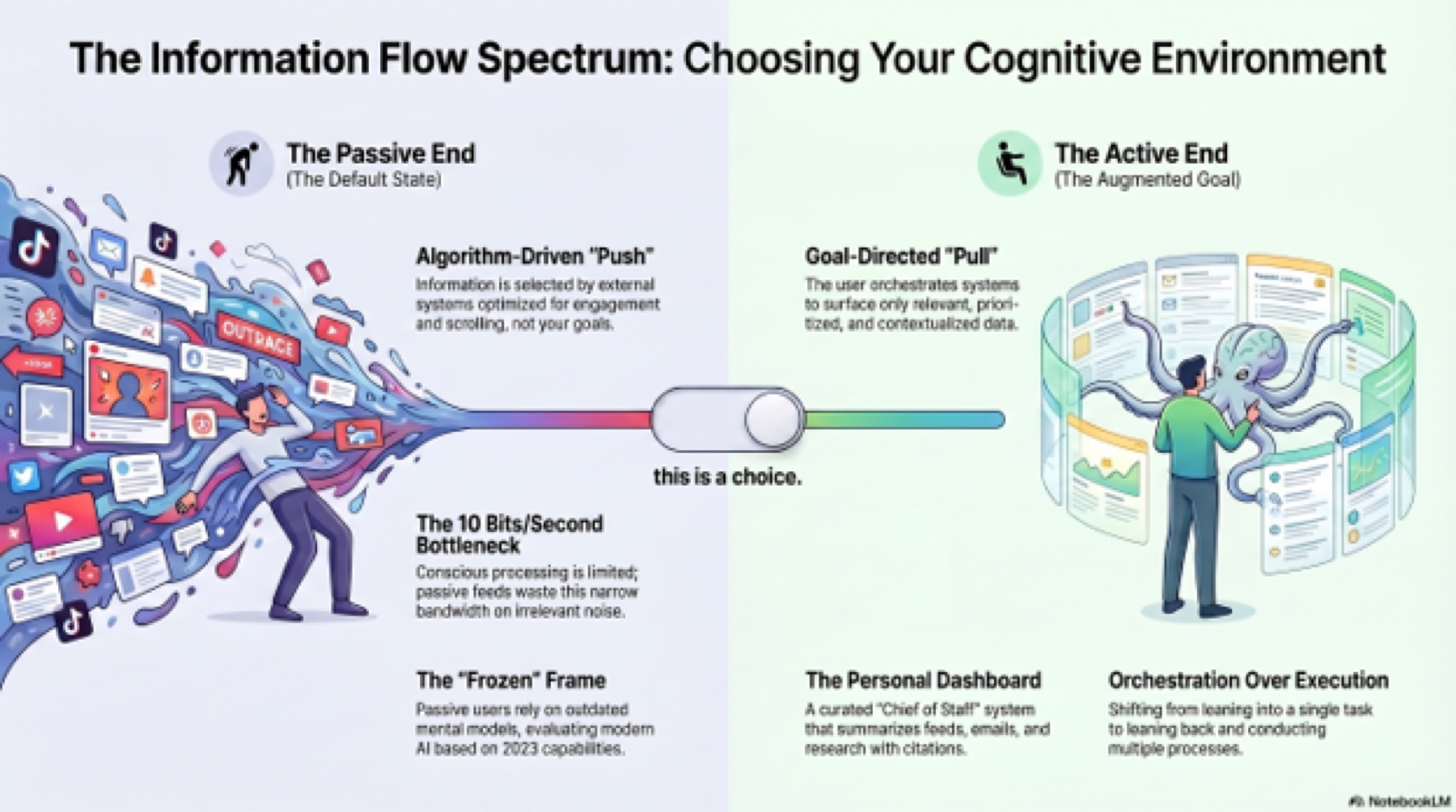 Your feed needs a chief of staff
Agentic AI offers a chance to move from TikTok-passive, where algorithms dictate our attention, to more of a chief-of-staff relationship.
→
See the full feed
Your feed needs a chief of staff
Agentic AI offers a chance to move from TikTok-passive, where algorithms dictate our attention, to more of a chief-of-staff relationship.
→
See the full feed